Life Sciences
Graph Neural Networks for Individualized Prediction of Alzheimer's Disease Progression
Description
Alzheimer's disease does not spread through the brain at random. Pathology tends to appear first in a small number of regions and then progress to areas that are anatomically and functionally connected to those initial sites, a pattern established across postmortem staging work and network imaging studies. The connective structure of the brain therefore carries information about where the disease is likely to advance. Most predictive models set that information aside. They describe a patient as a flat list of regional measurements and treat each measurement as independent of the others, which ignores the relationships that appear to govern how the disease actually moves through the brain. As a result, models that perform reasonably well on cross-sectional classification often do poorly at the harder task of forecasting how far and how fast an individual patient will decline.
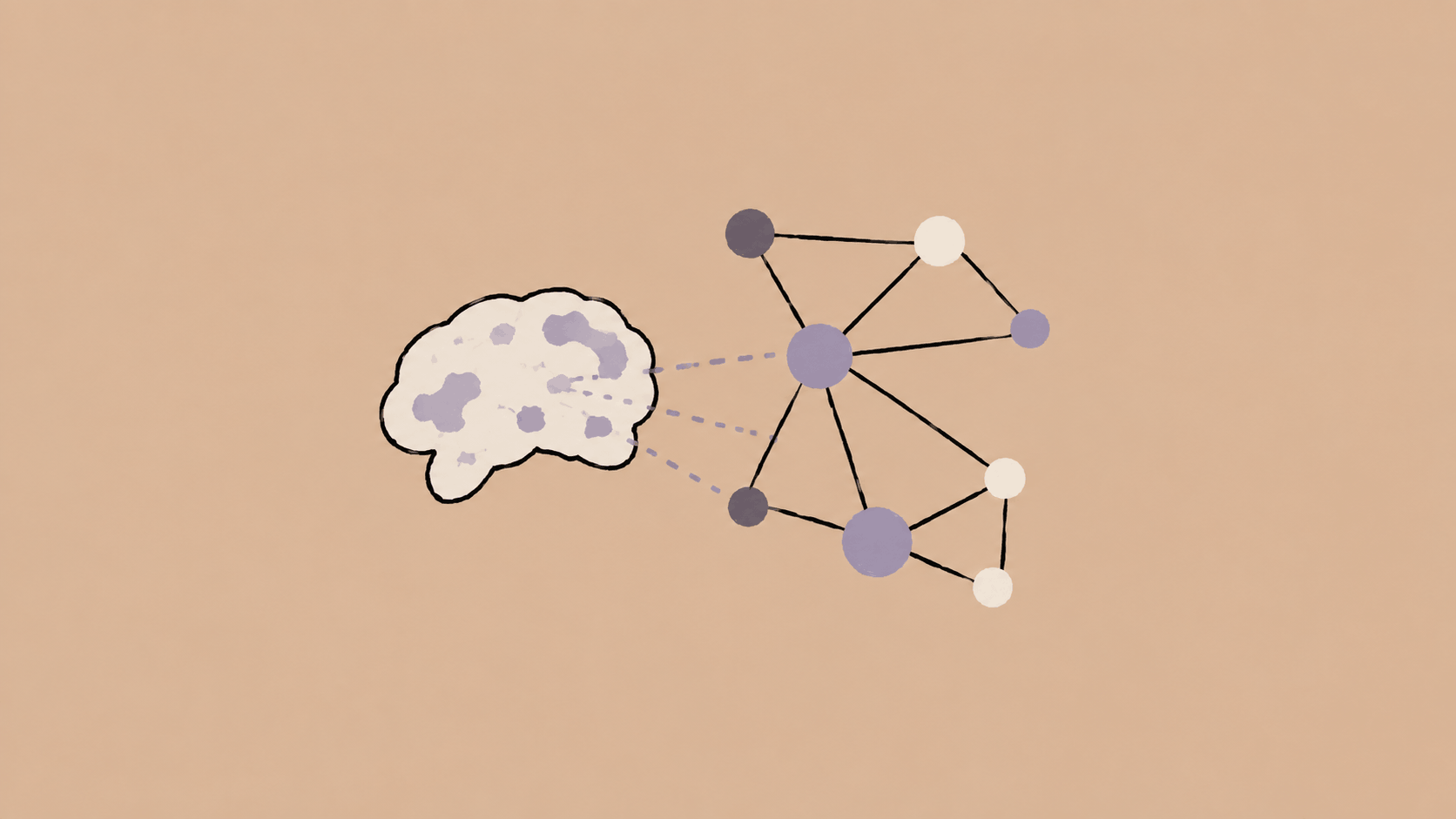
This project asks whether representing the brain explicitly as a network improves the prediction of disease progression. Each patient is modeled as a graph in which nodes correspond to cortical and subcortical regions and edges encode the connectivity between them, derived from diffusion MRI for structural links and resting-state functional MRI for functional links. Every node carries a set of imaging features, including cortical thickness, regional volume, glucose metabolism, and amyloid burden. A graph neural network operates on this representation and learns to predict change over a defined follow-up window, both as conversion from mild cognitive impairment to dementia and as the future trajectory of standard cognitive scores. The central question is whether the topology of brain connectivity adds predictive value beyond what the regional measurements provide on their own.
The group will build these patient graphs from the Alzheimer's Disease Neuroimaging Initiative cohort and train several graph architectures against non-graph baselines applied to the identical features in flattened form, so that any difference in accuracy can be attributed to the use of network structure rather than to the data itself. All models will be evaluated under subject-level splits and nested cross-validation to prevent a patient's later visits from leaking into training. Beyond accuracy, the work will examine which form of connectivity carries the most predictive signal and whether the regions the models rely on correspond to the sites that neuropathology identifies as early and central to the spread of the disease.