Research Teams
Featured Project
Endocrine Transitions and Cognitive-Emotional Regulation in Postpartum Depression
Although postpartum psychology has been extensively studied through depression, anxiety, and maternal mood, considerably less is known about how postpartum endocrine changes interact with specific cognitive-emotional processes underlying these conditions.
View Project
Filter
Endocrine Transitions and Cognitive-Emotional Regulation in Postpartum Depression
Although postpartum psychology has been extensively studied through depression, anxiety, and maternal mood, considerably less is known about how postpartum endocrine changes interact with specific cognitive-emotional processes underlying these conditions.

Evolutionary Conservation of Dormancy Mechanisms Across the Tree of Life
Dormancy has evolved independently across nearly every major branch of life, allowing organisms to survive prolonged periods of environmental stress through states such as diapause, hibernation, quiescence, anhydrobiosis, seed dormancy, and microbial persistence.

Spectral Stability of Graph Laplacians Under Structured Edge Perturbations
This project asks whether structured edge perturbations lead to consistent patterns of spectral change that are independent of the underlying graph construction.

Persistent Homology as a Framework for Detecting Structural Phase Transitions in Dynamic Social Networks
This project asks whether topological invariants derived from persistent homology identify structural transitions in dynamic networks more effectively than conventional graph statistics.

Spatial Transcriptomic Profiling of Tumor-Associated Macrophage Polarization States Mediated by TGF-β1 Signaling Gradient in Pancreatic Ductal Adenocarcinoma Microenvironment
This literature review will examine the spatial heterogeneity and functional plasticity of tumor-associated macrophages (TAMs) within the pancreatic ductal adenocarcinoma (PDAC) microenvironment, emphasizing how gradients of transforming growth factor-beta 1 (TGF-β1) regulate macrophage polarization and contribute to tumor progression.

Epigenetic Aging as a Predictor of Immune Decline Across the Human Lifespan
This project investigates whether epigenetic age acceleration is associated with measurable changes in immune system composition and function using large population-based cohorts containing paired DNA methylation profiles and immunological measurements.

Graph-Based Evidence Selection for Improving Retrieval-Augmented Generation in Large Language Models
This project investigates whether retrieval can be improved by optimizing the diversity and complementary information content of retrieved evidence rather than maximizing similarity scores alone.
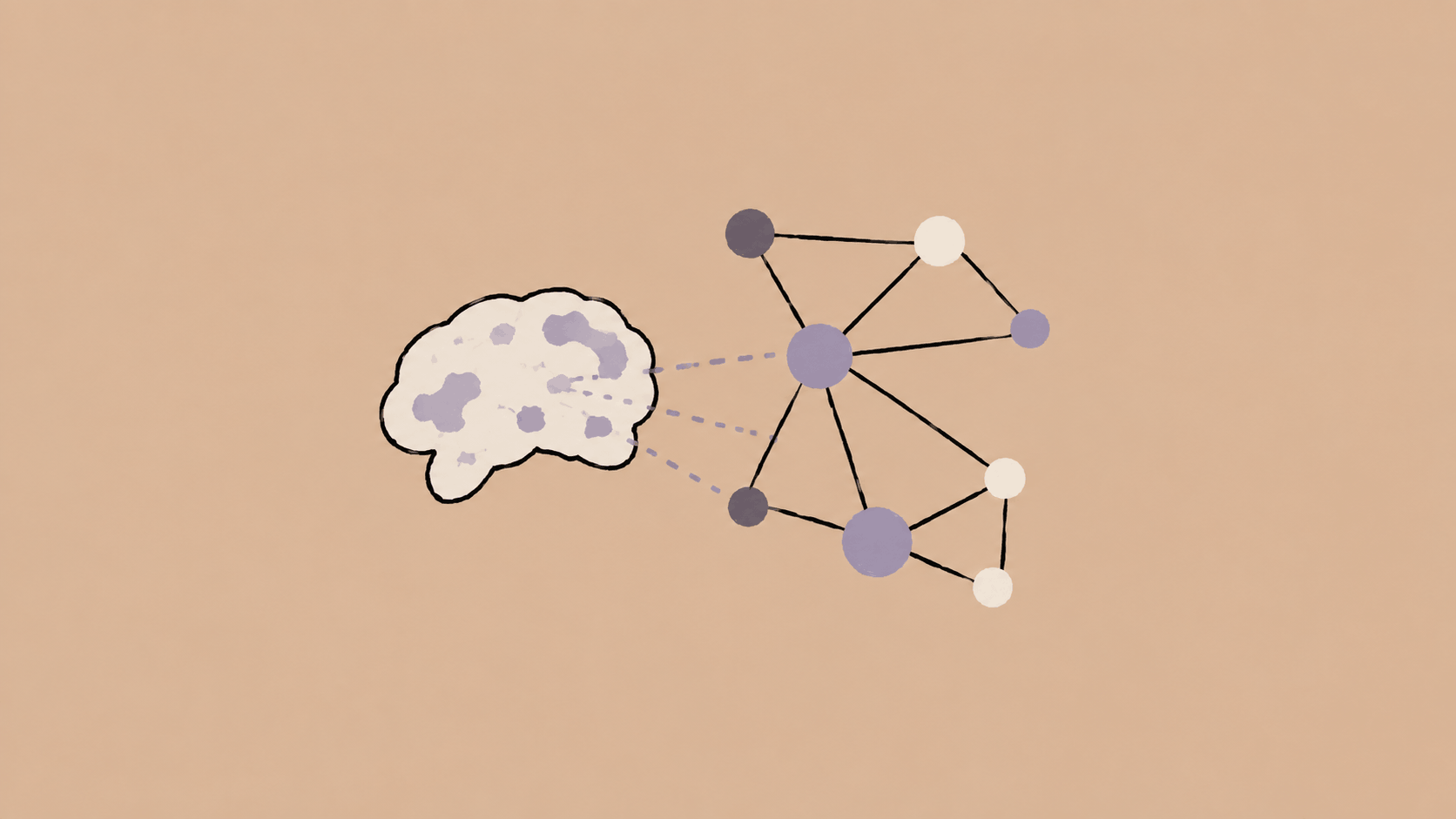
Graph Neural Networks for Individualized Prediction of Alzheimer's Disease Progression
Alzheimer's pathology spreads along connected brain regions, yet most models treat regional measurements as independent. This team models each patient's brain as a connectivity graph and tests whether graph neural networks forecast individual disease progression better than non-graph baselines on the same features.
Related content
Read
Browse the Journal
Explore open-access research published by students in the Journal of Youth in Medical Science.
Learn more
Programs
STEM outreach
Hands-on initiatives that bring science beyond the classroom and widen who takes part.
Learn more

News
Understanding Fingerprint™
Research is fundamentally a matching problem: the right student to the right mentor, the right collaborators to the right project, the right combination of backgrounds and technical expertise to a research question.
ProductAug 6, 2026

News
Nishan launches its first research cohort with seven interdisciplinary teams
We're launching Nishan's first research cohort, bringing together more than 28 students across seven teams with undergraduate mentors from top-10 universities and other research institutions.
AnnouncementsAug 12, 2026